
Executive Summary
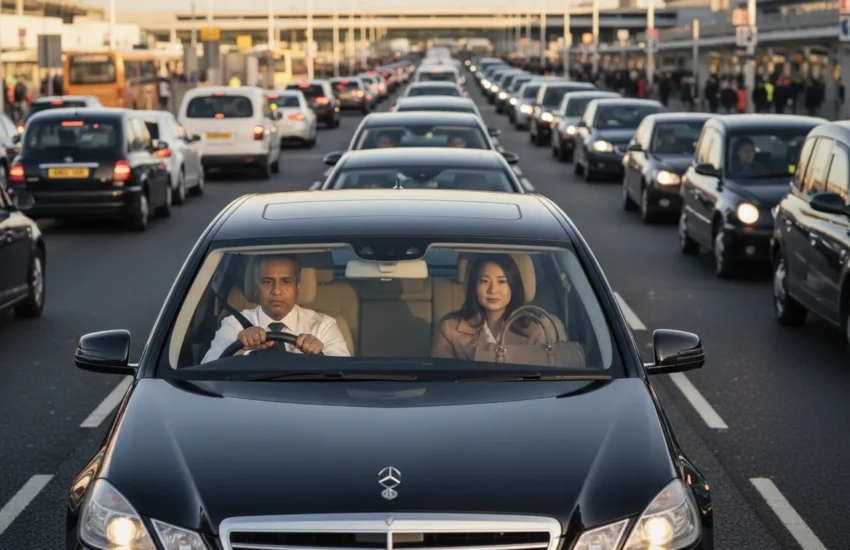
Airport congestion in Greater London is not a temporary or isolated phenomenon; it is the outcome of long-term structural trends shaped by population growth, urban densification, transport system saturation, and evolving travel behaviour. While passengers often experience congestion as a day-to-day inconvenience, the underlying trends reveal a deeper shift: airports are increasingly operating within multi-layered demand ecosystems that extend far beyond aviation itself.
This article examines how congestion across Greater London airports has evolved, why it behaves differently today than in the past, and how passengers should reinterpret congestion as a systemic condition rather than a short-term anomaly.
Why Is Airport Congestion a Regional Issue Rather Than an Airport-Specific One?
Congestion affecting London’s airports cannot be understood by looking at individual airports in isolation. Each airport is embedded within Greater London’s broader transport, housing, and employment systems. Road networks, rail corridors, and commuter flows intersect with airport access routes, creating shared congestion pressure points.
As a result, congestion experienced at one airport often reflects stress elsewhere in the city rather than conditions unique to that airport.
How Has Urban Expansion Changed Airport Access Dynamics?
Greater London has experienced sustained urban expansion, increasing:
- Residential density near key transport corridors
- Competition for road space
- Baseline traffic volumes
This expansion means that airport access routes now serve dual purposes: daily urban mobility and episodic travel demand. These competing uses increase congestion sensitivity, particularly during peak travel periods.
Why Do Congestion Trends Persist Even When Infrastructure Improves?
Infrastructure upgrades often increase capacity locally, but they also attract additional demand. This phenomenon, sometimes referred to as demand redistribution, means that:
- New capacity is absorbed quickly
- Travel behaviour adapts to perceived efficiency
- Congestion reappears in modified form
As a result, congestion trends evolve rather than disappear.
How Do Airport Growth Patterns Influence Congestion?
Passenger volumes across Greater London airports have grown unevenly. Some airports absorb growth through frequency increases, while others do so through larger aircraft or expanded route networks. Each growth pattern places different stress on surrounding infrastructure, influencing congestion characteristics such as:
- Peak intensity
- Duration
- Spatial distribution
Why Is Congestion More Variable Than in the Past?
Modern congestion is defined less by constant delay and more by volatility. Passengers experience:
- Wide variation between similar journeys
- Sudden congestion spikes
- Rapid condition changes
This volatility is driven by interconnected systems reacting to small disturbances.
How Do Freight and Commercial Movements Affect Airport Congestion?
Airports generate not only passenger traffic but also:
- Service vehicles
- Freight movements
- Logistics operations
These activities increasingly overlap with passenger access times, adding complexity to congestion patterns.
Why Do Greater London Airports Experience Congestion Spillover?
Spillover occurs when congestion near one airport redirects traffic into surrounding areas, affecting:
- Adjacent boroughs
- Alternative access routes
- Competing transport corridors
This creates secondary congestion zones that are not intuitively linked to airport operations.
How Does Temporal Distribution Shape Congestion Trends?
Congestion is no longer confined to traditional rush hours. Early-morning departures, late-night arrivals, and weekend leisure travel have expanded congestion windows, making delays less predictable.
Why Are Congestion Trends Closely Linked to Behavioural Change?
Passenger behaviour has evolved toward:
- Shorter booking windows
- Increased sensitivity to price and time
- Greater reliance on real-time information
These behaviours amplify congestion effects when many users respond simultaneously to perceived conditions.
How Do Congestion Trends Affect Passenger Perception and Trust?
Repeated exposure to unpredictable congestion can erode trust in travel planning assumptions. Passengers may attribute delays to service failure rather than systemic load, increasing dissatisfaction even when outcomes remain within statistical norms.
How Should Passengers Reframe Congestion Trends Mentally?
A more accurate framing treats congestion as:
- A persistent background condition
- Subject to variation rather than elimination
- Influenced by factors beyond immediate control
This reframing reduces frustration and improves expectation alignment.
