
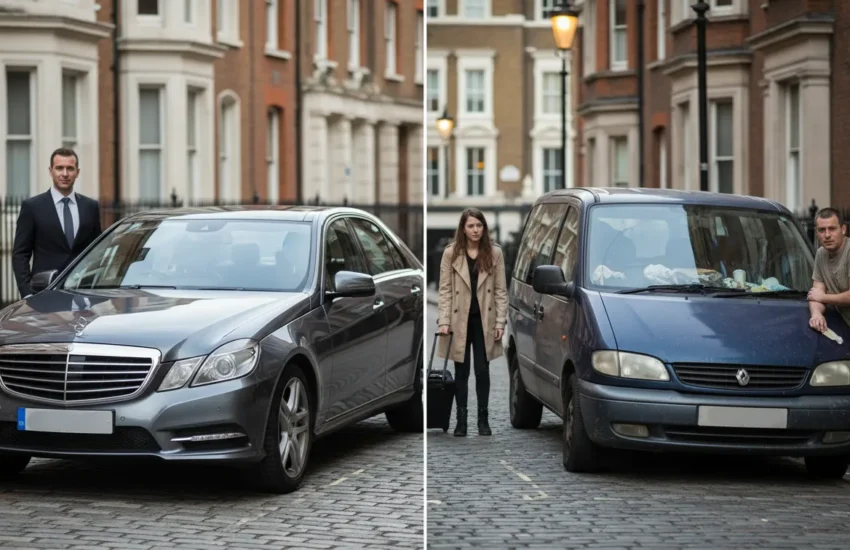
Executive Summary
London’s private transport ecosystem is strictly regulated, yet illegal and unlicensed operators continue to exist, particularly around airports, nightlife areas, and high-tourist zones.
Passengers who unknowingly use illegal operators face:
- No insurance coverage
- No TfL oversight or complaint protection
- Higher safety and financial risks
This guide explains how licensed minicabs and PHVs can be clearly identified, how illegal operators typically operate, and what passengers should do to protect themselves. Understanding these distinctions is essential for safe, legal, and accountable travel in London.
What Is the Difference Between a Licensed and an Illegal Operator?
What Defines a Licensed Operator in London?
A licensed private hire operator like Minicabs Hub must:
- Hold a valid TfL operator licence
- Use TfL-licensed drivers
- Use TfL-licensed vehicles
- Accept journeys only through pre-booking
- Comply with insurance, safety, and accessibility regulations
Licensed operators are legally accountable for every journey.
Reference: Transport for London – Private Hire Licensing Framework
What Makes an Operator Illegal?
An illegal operator is any service that:
- Accepts passengers without pre-booking
- Uses unlicensed drivers or vehicles
- Operates without TfL approval
- Solicits passengers directly (“touting”)
- Avoids receipts, trip records, or traceability
Illegal operators operate outside the regulatory system, placing all risk on the passenger.
How Can Passengers Verify a Licensed Minicab or PHV?
What Visual and Document Checks Can Be Made?
Passengers should check:
- Driver ID badge (TfL-issued, worn visibly)
- PHV licence disk on the windscreen or rear window
- Registered operator details matching the booking
- Vehicle registration matching booking confirmation
These checks confirm legal authority and insurance coverage.
How Does Pre-Booking Protect Passengers?
Pre-booking ensures:
- Journey details are logged and traceable
- Operator is legally responsible
- Fare and route are documented
- Passenger identity and pickup point are recorded
Any vehicle offering rides without a confirmed booking is illegal for private hire.
How Do Illegal Operators Typically Target Passengers?
Illegal operators often:
- Approach passengers inside airports or stations
- Offer “cheaper” or “faster” rides
- Avoid showing ID or documentation
- Demand cash payments only
- Operate during high-demand periods
These behaviors are strong indicators of non-compliance.
What Risks Do Passengers Face When Using Illegal Operators?
Safety Risks
- No background-checked driver
- No vehicle safety inspections
- No monitoring or GPS tracking
- No emergency accountability
Financial and Legal Risks
- No fare protection
- No insurance in case of accidents
- No legal recourse or refunds
- Potential involvement in unlawful transport activity
Using illegal operators eliminates all passenger protection mechanisms.
What Legal Protections Exist for Passengers Using Licensed Operators?
Passengers using licensed operators benefit from:
- Mandatory commercial insurance
- TfL enforcement oversight
- Complaint resolution channels
- Driver accountability and traceability
- Vehicle accessibility standards
These protections do not exist when using illegal operators.
Reference: TfL Passenger Safety and Compliance Enforcement
How Can Passengers Report Illegal Operators?
Passengers may:
- Report directly to Transport for London
- Provide vehicle registration details
- Report incidents involving touting or unsafe conduct
- Submit complaints through official TfL channels
Public reporting helps remove unsafe operators from London’s transport network.
Why Do Search Engines Prioritise Licensed Operators?
Search engines favor licensed operators because:
- They satisfy real-world safety outcomes
- They align with user end-goals
- They reduce harmful user experiences
- They provide verifiable authority signals
Licensed operators demonstrate higher historical data quality, fewer negative engagement signals, and stronger trust propagation.
Why Understanding This Distinction Matters for Passengers
- Protects personal safety and finances
- Ensures legal compliance
- Supports accountable transport services
- Prevents exploitation of vulnerable travelers
Choosing licensed operators is not just safer—it is essential.
