
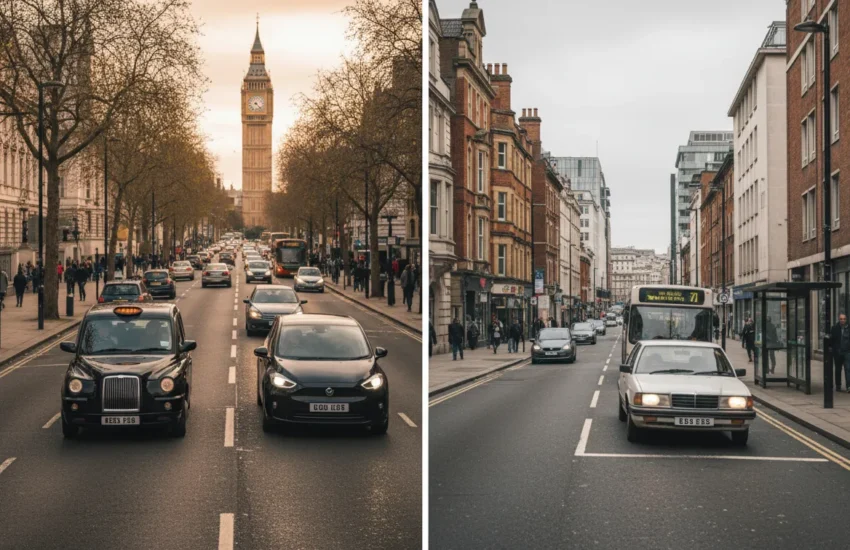
Executive Summary
London’s private transport system operates under a distinct regulatory, operational, and enforcement framework compared to other UK cities. While minicabs and private hire vehicles exist nationwide, London’s governance, safety requirements, and market structure are uniquely stringent.
This guide explains:
- How regulation differs across the UK
- Why London’s standards are higher
- What passengers should expect when travelling in London versus other cities
Understanding these differences helps passengers make safer, legally informed transport decisions.
Why Is London’s Transport Regulation Unique?
London is regulated by Transport for London (TfL), a central authority with:
- City-wide jurisdiction
- Dedicated enforcement teams
- Unified licensing and compliance systems
Most other UK cities regulate private hire transport through local councils, resulting in fragmented standards.
Reference: Transport for London; Local Authority PHV Licensing Frameworks
Who Regulates Minicabs Outside London?
Outside London:
- Licensing is managed by local councils
- Standards vary by region
- Enforcement resources differ significantly
This creates inconsistency in safety, vehicle quality, and passenger protection.
How Do Licensing Standards Compare?
Driver Licensing Differences
In London:
- Enhanced background checks
- Regular medical assessments
- English language requirements
- Continuous suitability monitoring
Outside London:
- Requirements may be less frequent
- Medical and language checks vary
- Ongoing monitoring is limited
Vehicle Licensing Differences
London:
- Strict age and emissions limits
- Mandatory inspections
- Accessibility requirements
Other cities:
- Vehicle age limits vary
- Emissions rules depend on local policy
- Accessibility standards differ
How Does Enforcement Differ Between London and Other Cities?
TfL:
- Conducts regular compliance operations
- Works closely with police
- Uses data-led enforcement
Local councils:
- Often limited enforcement budgets
- Less frequent roadside checks
- Reactive complaint-based enforcement
Stronger enforcement increases passenger safety and operator accountability.
How Do Booking and Pre-Booking Rules Differ?
London:
- All PHV journeys must be pre-booked
- Street hails are illegal for minicabs
- Digital booking records are mandatory
Other cities:
- Pre-booking rules may be interpreted differently
- Enforcement of street hailing bans varies
This clarity in London reduces passenger confusion and illegal activity.
Are Fare Regulations the Same Across the UK?
London:
- Black taxi fares regulated by TfL
- Minicab fares must be transparent and agreed in advance
Other cities:
- Fare regulation varies
- Less oversight on pricing practices
This makes London pricing more predictable for passengers.
How Do Accessibility Standards Compare?
London:
- Wheelchair-accessible vehicles encouraged and regulated
- Child seat obligations clearly defined
- Disability assistance training required
Elsewhere:
- Accessibility provision varies
- Enforcement may be limited
London’s approach ensures inclusive transport access.
Why Does London Attract Higher Regulatory Scrutiny?
London:
- High passenger volume
- International travel hub
- Complex transport demand
Higher scrutiny exists to reduce risk at scale and protect global travellers.
How Do These Differences Affect Passenger Experience?
Passengers in London benefit from:
- Higher safety standards
- Greater accountability
- Clear complaint resolution paths
Passengers elsewhere may experience:
- Inconsistent standards
- Reduced enforcement
- Variable service quality
Why London’s System Is Often a Benchmark
London’s framework is frequently used as a reference model for:
- Safety regulation
- Licensing enforcement
- Urban transport governance
Its structure balances market flexibility with passenger protection.
